Why Nordlabs
Building an AI-native operating system for creative studios
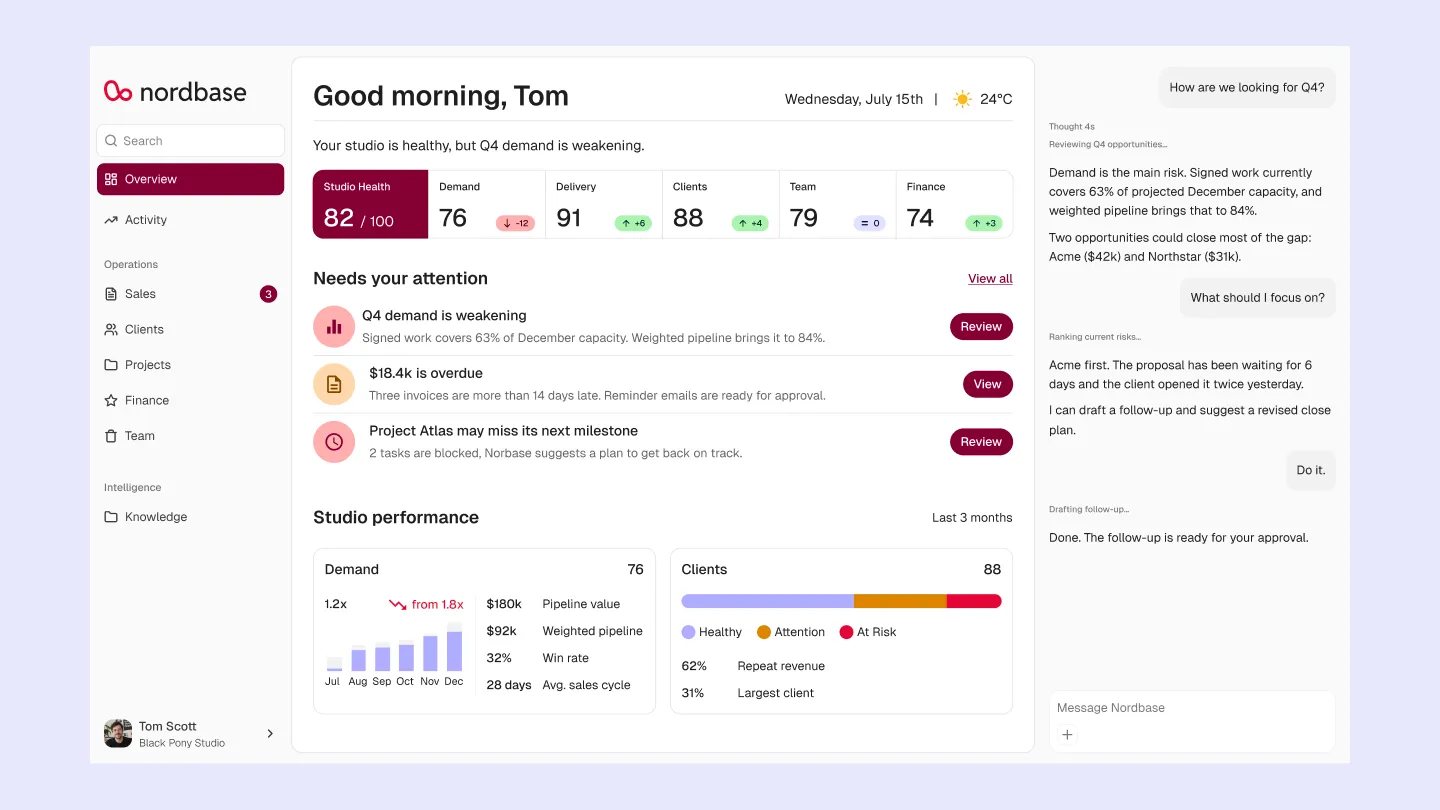
Nordbase is an AI-native operating system designed for small creative agencies and studios. It brings sales, clients, projects, finance and knowledge into one connected system, giving AI the context it needs to understand how the business is actually operating.

The challenge
A studio is two businesses.
Creative studios rarely lack software. The problem is that their business is usually spread across too many systems. Leads live in a CRM, projects somewhere else, financial information in spreadsheets, conversations in Slack and important decisions in people's heads.
As the studio grows, the founder or operations lead often becomes the person manually connecting all of this information. Nordbase started from the idea that the solution was not another project management tool, but a system capable of understanding the studio as a whole.
Our approach
Connected operating model
We started by defining the studio itself as a connected operating model. Leads become clients, clients have projects, projects involve people and generate revenue, while documents, conversations and decisions add context around everything that happens.
That shared model became the foundation of the product. Instead of creating isolated tools, Nordbase was organized around Sales, Clients, Projects, Finance, Team and Knowledge, all contributing information to the same underlying system.
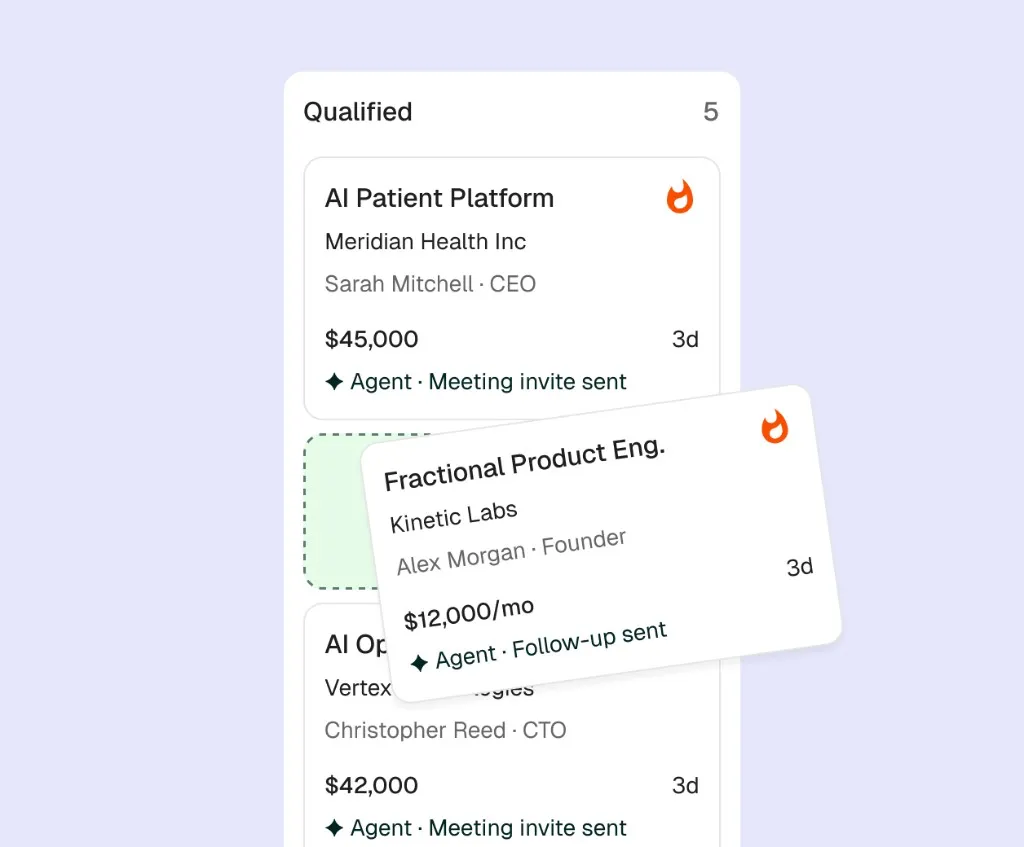
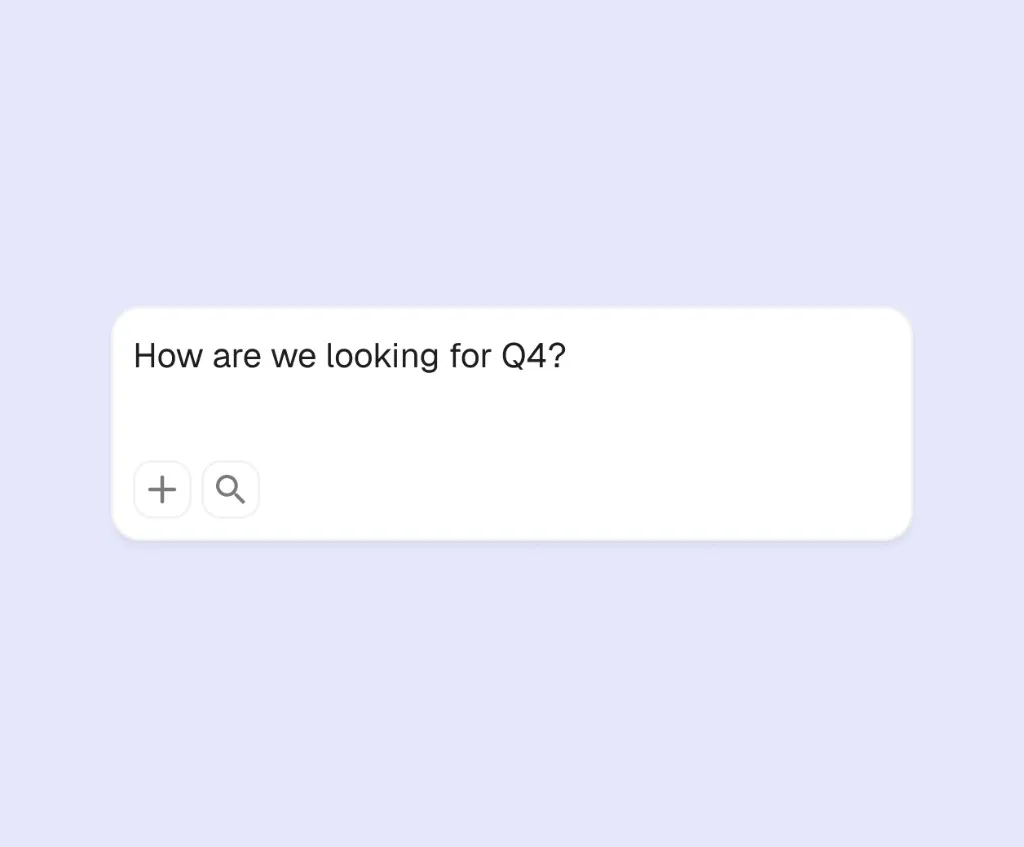
This also shaped how AI was integrated. Rather than placing a chatbot on top of the application, we designed agents that work across the product using the context already available in the system. They can help qualify opportunities, identify what requires attention, interpret operational signals and progressively participate in the work.
At a higher level, Studio Health brings signals from Demand, Delivery, Clients, Team and Finance together to answer a more useful question than what tasks are open: how is the studio actually doing?
Under the hood
Shared operational data model
Nordbase was built around a shared operational data model used by both the application and its AI agents. Clients, leads, projects, financial records, documents and activity are represented as connected entities, allowing the system to reason about the business rather than processing each area independently.
Agents operate through explicit tools instead of having unrestricted access to the application. They can retrieve context, inspect records, evaluate information, propose changes and trigger specific workflows. Context is assembled dynamically for each task, combining structured application data with relevant documents, decisions and recent activity rather than sending the entire history to a model.
Where possible, AI outputs are structured so they can become part of the application itself. A qualification workflow, for example, can produce a score, reasoning, missing information and a recommended next action rather than simply generating a block of text.
Longer processes are handled as multi-step workflows with controlled actions, retries and human approval where needed. This allows the system to progressively move from assistance toward automation without giving up visibility or control.
Outcome
The operating system
Nordbase established the foundation for an operating system where traditional software and AI are part of the same architecture. Instead of building isolated AI features, the product was designed so that agents can understand the business context, reason across different areas and participate in operational workflows.
The project also reinforced a principle that increasingly shapes how we build products at Nordlabs: AI-native software is not about adding a chatbot to an existing interface. It is about reconsidering how software should work when the system can understand context, make decisions and take action.

What comes next?
You do not need a finished brief. An idea, a problem or an opportunity is enough to begin.
